
Child safety: what NSW law requires
Under the National Construction Code, which applies to all residential buildings in NSW, any openable window that is above ground floor level — or where the internal floor-to-sill height is less than 1.7m — must have one of the following:
- A restrictor that limits the opening to no more than 125mm in any direction, OR
- A screen that complies with AS5039 (the security screen standard)
The 125mm limit is based on research into typical child head and body dimensions — a gap of 125mm or less prevents a young child from falling through or pushing the window further open. The restrictor must also be releasable by an adult without tools in an emergency exit situation.
This requirement applies to new builds and to replacement windows. If you’re replacing upper-floor windows in an existing home, the new windows must meet this requirement even if the originals didn’t. Many newer aluminium window series have integrated restrictor positions built into the hardware — this is the cleanest solution. Older windows without integrated positions can be retrofitted with aftermarket restrictors.
How a compliant restrictor works
A window restrictor is a device fitted to the opening mechanism that physically prevents the window from opening beyond 125mm under normal force. The most common types are: a pin-and-socket restrictor (a metal pin inserted into a hole in the frame that blocks the sash travel), a friction strap (a strap attached to the sash and frame that limits travel length), and a keyed restrictor (a lock that releases when a key is turned by an adult).
The key requirement is adult releasability without tools. In a fire or emergency where someone needs to exit quickly, the restrictor cannot require a screwdriver or special tool to release. Pin restrictors are simply pulled out by an adult. Keyed restrictors open with a standard key that can be left in the mechanism within adult reach but out of children’s reach. Friction straps can be unclipped in one motion.
A restrictor does not provide security against forced entry. At 125mm, the window is still accessible to a hand reaching through from outside, and most restrictor styles can be defeated with basic tools by a determined intruder. If security is the goal alongside child safety, a compliant AS5039 security screen is the better specification — it satisfies the child safety requirement and provides genuine forced-entry resistance.
Safe4Kids accreditation
Safe4Kids is an independent voluntary accreditation scheme for window suppliers. Accredited suppliers have had their products and installation practices verified against child fall prevention standards by an independent auditor. It’s a meaningful signal that a supplier’s restrictors are correctly specified and their installation teams know the requirements.
Everclear holds Safe4Kids accreditation. When comparing suppliers, ask whether they hold it and ask to see the documentation — it’s verifiable through the Safe4Kids website.
Security against forced entry: what actually works
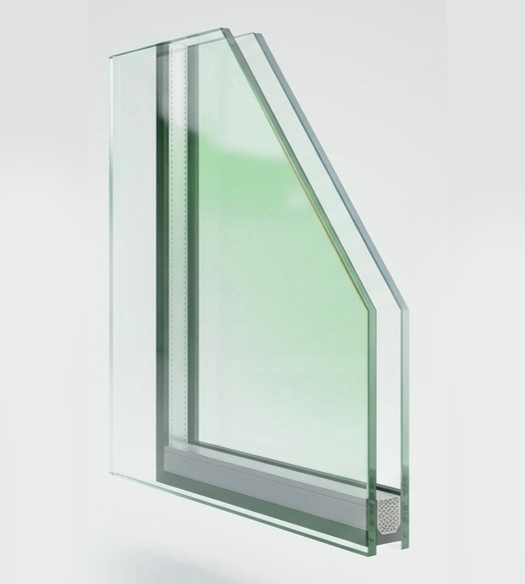
Laminated glass. The PVB interlayer bonds the two glass sheets. When struck, the glass fractures but the sheet holds together. Cutting or levering through laminated glass takes significant time and creates substantial noise. This is far more effective than toughened glass for security — toughened glass shatters into granules immediately on impact, creating an instant opening. For ground-floor windows on a security-conscious property, laminated glass is the single most effective upgrade.
Multi-point locking. A lock mechanism that engages at multiple points along the frame rather than a single central hook. The frame-to-sash engagement at multiple points dramatically increases the force required to lever the sash open. Standard on quality bi-fold doors and available on sliding doors and windows as an upgrade from single-hook locks.
Keyed stays on awning and casement windows. The standard winder or friction stay on an awning window can be manipulated from outside even when the main lock is engaged, because the sash can be pushed in against the compression and the lock lever depressed. A keyed stay adds a secondary lock on the arm that can only be released from inside. Useful for any ground-floor awning window that needs ventilation while unoccupied.
AS5039-compliant security screen mesh. Stainless steel woven mesh that has passed three standardised physical tests: knife shear resistance, blunt impact resistance, and jemmy (pry bar) resistance. Screens marketed as “security screens” without AS5039 certification are typically aluminium mesh — heavier than fly screen mesh but not tested and not genuinely resistant to determined forced entry.
Screen types compared
| Screen type | Standard | What it resists | Child safety compliant? |
|---|---|---|---|
| Fibreglass fly screen | None | Insects only | No |
| Aluminium mesh “security” screen | None standardised | Some deterrence; can be cut or bent | Only if rated to AS5039 |
| AS5039 stainless steel security screen | AS5039 | Knife shear, blunt impact, jemmy resistance | Yes |
| Fixed steel bars or grilles | Structural attachment | Highest resistance | Yes — but creates fire egress risk |
Which window types are most secure
Awning and casement windows seal by compression against a continuous perimeter gasket. When locked, the sash is pressed firmly into the frame with no gap to insert a lever. They’re inherently more resistant to forced entry than sliding windows, which have an inherent small gap in the brush pile seal that can be used as a lever point. Sliding windows can be significantly improved with a secondary track lock (a bolt that drops into the track to prevent the panel sliding even if the main lock is defeated), which is a cheap and effective retrofit. Bi-fold and stacking doors with multi-point locking and laminated glass provide strong security when correctly specified and installed.
We fit restrictors, security stays and AS5039 screens across Greater Sydney. Safe4Kids accredited.
Call 1300 854 726